The Role of Protective Coatings in Improving the Service Life of Marine Structures
Keywords:
Protective Coatings, Marine Structures, Corrosion, Surface Protection, Service LifeAbstract
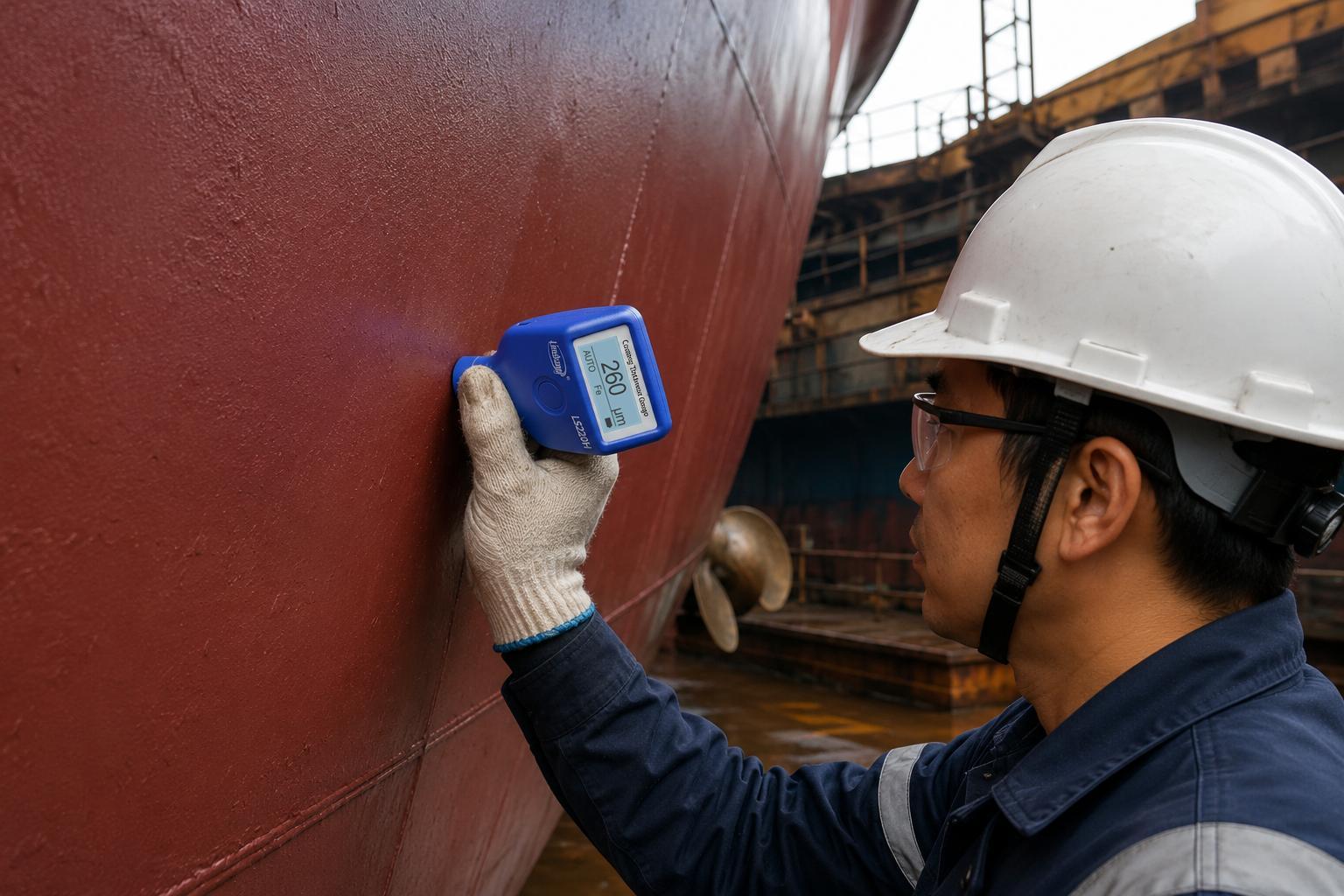
Marine structures are continuously exposed to harsh environmental conditions, including seawater, humidity, waves, temperature changes, and corrosive agents. These conditions can accelerate corrosion and material deterioration, potentially reducing the strength, performance, and service life of marine structures. Protective coatings are therefore widely applied as an important method for protecting structural materials from environmental damage. This study aims to examine the role of protective coatings in improving the service life of marine structures and to identify the factors that influence coating performance. The method used in this study is a literature review based on scientific journals, research articles, books, and other relevant sources related to protective coatings and marine corrosion. The results indicate that protective coatings can reduce direct contact between structural materials and corrosive marine environments, thereby helping to reduce corrosion and extend the service life of marine structures. Coating performance is influenced by coating material, surface preparation, coating thickness, application method, environmental conditions, and maintenance. Proper selection, application, and periodic maintenance of protective coatings are therefore essential for maintaining structural durability and reducing maintenance requirements. Overall, protective coatings play an important role in improving the durability, reliability, and service life of marine structures exposed to corrosive marine environments.
References
[1] R. G. Echaniz, S. Paul, and R. Thornton, “Effect of seawater constituents on the performance of thermal spray aluminum in marine environments,” Mater. Corros., vol. 70, pp. 1004–1996, 2019, doi: 10.1002/maco.201810764.
[2] B. G. Nwoka, A. J. Chuku, and A. A. Ekine, “Numerical assessment of marine coating materials, balancing, performance and environmental compatibility,” Glob. J. Eng. Technol. Adv., 2026, doi: 10.30574/gjeta.2026.26.3.0063.
[3] M. Drozda and A. Miszczyk, “Selection of Organic Coating Systems for Corrosion Protection of Industrial Equipment,” Coatings, 2022, doi: 10.3390/coatings12040523.
[4] N. E. A. Nassar, “Corrosion in marine and offshore steel structures: Classification and overview,” Int. J. Adv. Eng. Sci. Appl., 2022, doi: 10.47346/ijaesa.v3i1.80.
[5] R. Grinon-Echaniz, S. Paul, R. Thornton, P. Refait, M. Jeannin, and Á. Rodríguez, “Prediction of Thermal Spray Coatings Performance in Marine Environments by Combination of Laboratory and Field Tests,” Coatings, 2021, doi: 10.3390/coatings11030320.
[6] A. Firoozi, A. Firoozi, D. Oyejobi, S. Avudaiappan, and E. Flores, “Enhanced Durability and Environmental Sustainability in Marine Infrastructure: Innovations in Anti-Corrosive Coating Technologies,” Results Eng., 2025, doi: 10.1016/j.rineng.2025.105144.
[7] S. Price and R. Figueira, “Corrosion Protection Systems and Fatigue Corrosion in Offshore Wind Structures: Current Status and Future Perspectives,” THE Coatings, vol. 7, p. 25, 2017, doi: 10.3390/coatings7020025.
[8] N. Bogatu et al., “Assessment of the Effectiveness of Protective Coatings in Preventing Steel Corrosion in the Marine Environment,” Polymers (Basel)., vol. 17, 2025, doi: 10.3390/polym17030378.
[9] G. Dalmora, E. P. B. Filho, A. A. M. Conterato, W. S. Roso, C. Pereira, and A. Dettmer, “METHODS OF CORROSION PREVENTION FOR STEEL IN MARINE ENVIRONMENTS: A REVIEW,” Results in Surfaces and Interfaces, 2025, doi: 10.1016/j.rsurfi.2025.100430.
[10] O. Knudsen, C. Hagen, A. Skilbred, T. Bruaas, and J. Nærland, “Root causes for corrosion on painted steel structures in marine environments,” Mater. Corros., vol. 76, pp. 802–811, 2023, doi: 10.1002/maco.202314046.
[11] A. Momber, D. Langenkämper, T. Möller, and T. Nattkemper, “The exploration and annotation of large amounts of visual inspection data for protective coating systems on stationary marine steel structures,” Ocean Eng., 2023, doi: 10.1016/j.oceaneng.2023.114337.
[12] A. Anna and V. Romanovski, “Corrosion and Degradation of Materials in Marine Environments: Implications for Coastal and Offshore Infrastructure,” Eng. Reports, vol. 8, 2026, doi: 10.1002/eng2.70922.
[13] A. Gharieh, A. Sharifian, and S. Dadkhah, “Enhanced long-term corrosion resistance and self-healing of epoxy coating with HQ-Zn-PA nanocomposite,” Sci. Rep., vol. 15, 2025, doi: 10.1038/s41598-025-92158-7.
[14] C. Ionescu, “Surface Preparation Parameters: a Critical Lever for the Lifetime and Performance of Anti-corrosion Coatings,” MECC 2025, 2025, doi: 10.5006/m2025_00351.
[15] A. Olajire, “Recent advances on organic coating system technologies for corrosion protection of offshore metallic structures,” J. Mol. Liq., 2018, doi: 10.1016/j.molliq.2018.08.053.
[16] C. Wei, G. Wang, M. Cridland, D. Olson, and S. Liu, “Corrosion Protection of Ships,” pp. 533–557, 2018, doi: 10.1016/b978-0-323-52472-8.00026-5.