Hydrodynamic Effects on Water Uptake, Coating Delamination, and Underfilm Corrosion in Marine Protective Coatings
Keywords:
Marine Corrosion, Protective Coating, Water Uptake, Delamination, Underfilm CorrosionAbstract
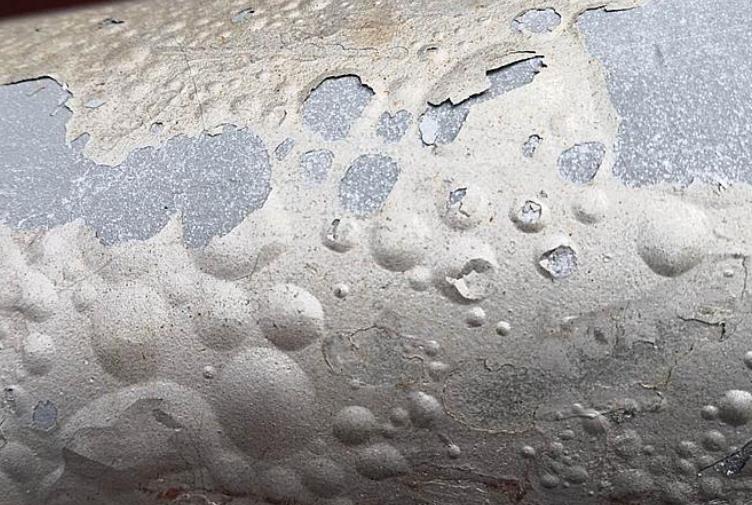
Protective coatings are widely employed to mitigate corrosion of metallic structures exposed to marine environments. However, the presence of seawater flow can accelerate coating degradation through enhanced mass transfer, water uptake, mechanical stresses, delamination, and subsequent underfilm corrosion. This article discusses the influence of hydrodynamic conditions on the degradation mechanisms of protective coatings, with particular emphasis on the interrelationships among flow velocity, water uptake, coating delamination, and corrosion propagation beneath the coating. The discussion is based on the interaction between marine environmental conditions, coating properties, and electrochemical processes occurring at the coating–metal interface. Conceptually, increasing flow velocity may enhance the transport of aggressive species, particularly chloride ions and dissolved oxygen, toward the coating surface. This condition may facilitate water penetration through pores, microcracks, and diffusion pathways within the coating. Continuous water accumulation at the coating–substrate interface can subsequently reduce coating adhesion, promote blister formation and delamination, and accelerate electrochemical corrosion of the underlying metal. Therefore, evaluating coating performance solely under static immersion conditions may not adequately represent the actual operating conditions of marine structures. This study emphasizes the importance of incorporating hydrodynamic conditions into coating degradation assessments to obtain a more realistic understanding of protective coating performance in marine applications.
References
[1] N. Bogatu et al., “Assessment of the Effectiveness of Protective Coatings in Preventing Steel Corrosion in the Marine Environment,” Polymers (Basel)., vol. 17, 2025, doi: 10.3390/polym17030378.
[2] K. Wang, Z. Xu, L. Zhang, Y.-H. Li, J. Feng, and X. Luo, “Flow-interface-reaction interaction governing synergistic erosion-corrosion of WC-4Co-58Cr coating under rotating liquid-solid flow in marine environment,” J. Mater. Res. Technol., 2026, doi: 10.1016/j.jmrt.2026.05.024.
[3] H.-Y. Guo et al., “Corrosion Behavior of Alkyd-Resin-Coated Carbon Steel under Cathodic Polarization in Both Static and Flowing Seawater,” Coatings, 2023, doi: 10.3390/coatings13071296.
[4] A.-H. A. Abdul-Hamied and A. D. Assi, “Evaluation of the Effect of Static and Flowing Conditions on the Corrosion Behavior of the Hull of Marine Ships,” J. Eng., 2024, doi: 10.31026/j.eng.2024.11.06.
[5] H. Alqahtani, J. AlGhamdi, and N. Mu’azu, “Synergistic Effects of Zn-Rich Layered Double Hydroxides on the Corrosion Resistance of PVDF-Based Coatings in Marine Environments,” Polymers (Basel)., vol. 17, 2025, doi: 10.3390/polym17030331.
[6] A. Anna and V. Romanovski, “Corrosion and Degradation of Materials in Marine Environments: Implications for Coastal and Offshore Infrastructure,” Eng. Reports, vol. 8, 2026, doi: 10.1002/eng2.70922.
[7] S. Musabikha et al., “The effects of flow rate on impedance measurements of marine coatings using a rotating cylinder electrode,” J. Coatings Technol. Res., vol. 21, pp. 2093–2104, 2024, doi: 10.1007/s11998-024-00957-w.
[8] Z. Chen et al., “Advances in organic coatings for corrosion protection in deep-sea environments: Current status, strategies, and future perspectives.,” Adv. Colloid Interface Sci., vol. 351, p. 103803, 2026, doi: 10.1016/j.cis.2026.103803.
[9] Y. Xiong, H. Liu, J. Xu, and H. Chen, “Mechanical properties of offshore floating photovoltaic structural coating/carbon steel system in a marine environment,” Ocean Eng., 2025, doi: 10.1016/j.oceaneng.2025.120585.